Pittsboro, NC
Deck, Porch & Fence Repair in Pittsboro, NC
Out on acreage the fence is measured in hundreds of feet rather than panels, and the deck is quite often eight feet in the air because the ground drops away behind the house. Both change what the job is.
Scale changes the job
Pittsboro is the most rural area we cover and the exterior timber work here is a different scale from anything in a subdivision.
A suburban fence is six or eight panels along a boundary. A Chatham County fence can run several hundred feet across ground that rises and falls, around outbuildings, past a gate wide enough for a trailer.
That means the job starts with a walk rather than a look.
Walking a fence properly
Every post gets pushed. A post that has rotted at ground level moves with very little effort, sometimes with a slight crunching feel, while looking perfectly sound both above and below the failure.
The reason to do the whole run rather than just the leaning section is simple: every post in that fence went in on the same day and has had the same thirty years of weather. If one has gone at grade, the others are on the same clock.
What you get from us is a count — how many have failed, how many are close, how many are fine. From that you can make an actual decision: replace the failures now, or replace the run once and stop thinking about it.
Ground and posts
Out here the ground varies a lot across a single property, and it changes what a post needs.
Concrete poured as a collar with a flat top holds water against the timber and can rot a post faster than no concrete at all — plenty of the posts we dig out have failed inside an intact concrete collar. Where concrete is used it needs shaping so water sheds away, with drainage below. On some ground a metal standoff so the timber never touches soil is the better answer.
Gates are their own item. A field or drive gate is heavy, it swings on a single post, and that post takes a load nothing else in the fence does. Gate posts fail first and they are worth checking separately.
Decks on sloping ground
Where the land drops away behind a house, the rear deck can sit eight or ten feet up on tall posts. That is common out here and it changes three things.
Bracing. Tall posts need diagonal bracing to stop the structure swaying. On older decks it is frequently either missing, or fitted and since loosened. A deck that moves noticeably when several people walk on it is telling you something.
The guard rail matters more. A fall from two feet is a bruise. A fall from ten is not. Railing height, the gaps between balusters and the strength of every post connection get checked properly rather than glanced at, and if what is there is not adequate we will say so plainly.
Access for the repair. Working on a deck that is ten feet up over sloping ground needs proper setup, which is a real part of the time and the price.
Outbuilding steps
Steps into a barn, workshop or detached garage are the ones nobody inspects, and they have the hardest life on the property: tools and equipment carried up them, wet boots, and often no roof over them at all.
They are worth doing properly rather than patching, and while we are there the rise gets measured across the whole flight. Steps that vary in height catch people out because your feet learn the first one — and somebody carrying something heavy has no free hand to recover with.
Porches on older houses
Farmhouses and older Chatham County homes frequently have a porch that has been repaired several times over its life, sometimes with whatever was available at the time.
Two things to know:
Tongue-and-groove porch flooring fails from underneath. The boards interlock, so there are no gaps to drain and no airflow below, and the space under a roofed porch is humid and still. The top face can be sound and painted while the underside has gone.
Original profiles are not stocked. Turned balusters, rail caps, column bases. Usually only a few pieces are actually beyond saving, and matching them costs more than pressure-treated stock and is the difference between a repair and a downgrade.
Chatham Park and the newer developments
At the other end of town the decks are recent, the ledgers are flashed and the work is ordinary: boards, fasteners, railing connections and the first proper maintenance cycle.
Access and bundling
Gates, gravel drives, and buildings well back from the road are normal here. Tell us about them when you get in touch — it decides the vehicle, where timber gets unloaded, and how much time to allow.
Pittsboro is about thirty minutes from us and the round trip is an hour, which makes this a place where sending the whole list genuinely pays. Deck and fence work is a multi-day booking anyway, so everything else on the property gets done at a fraction of what a separate visit would cost.
Getting a price
For a fence, a photo along the run and a count of how many posts move when you push them.
For a deck, a wide shot, a photo from the side showing how high it sits, a close-up of the worst area, and one from underneath if you can safely get there.
Long runs need a survey rather than a look
A fence around a Chatham County property can run several hundred feet across changing ground. Working out how many posts have actually failed, rather than fixing the one that is leaning, is the difference between a repair and doing the same thing again next year.
Sloping lots put decks high in the air
Where the ground falls away, the rear deck can sit eight or ten feet up on tall posts. That changes the guard rail requirement, the bracing needed against sway, and how the whole thing gets accessed for repair.
Outbuilding steps get used harder than house steps
Steps into a barn, workshop or detached garage carry tools, equipment and wet boots, often with no roof over them. They wear faster than anything attached to the house and they are the ones nobody inspects.
Decks & Fences we have done
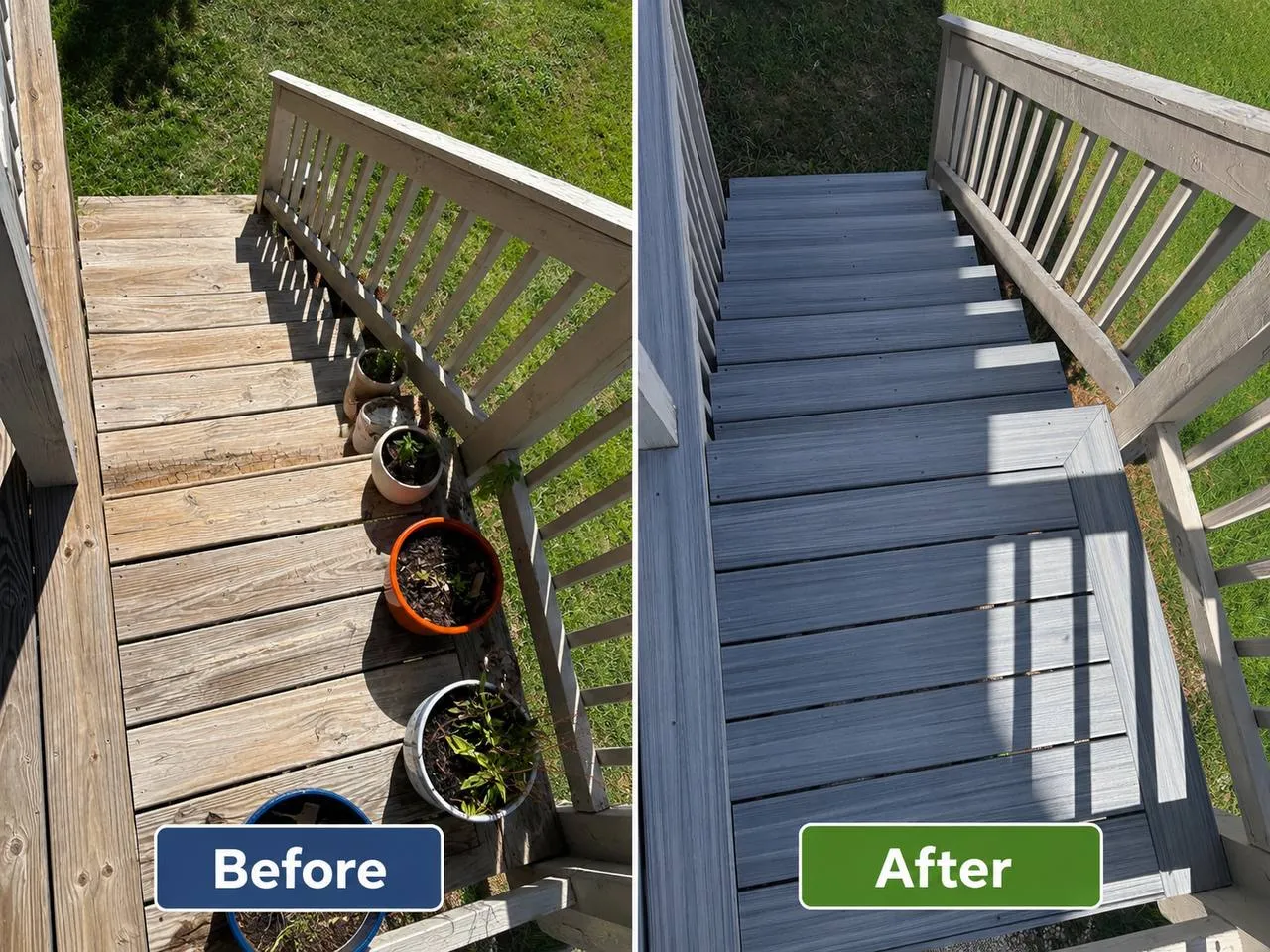
Weathered pressure-treated boards swapped for composite over framing that was still sound. The structure stayed, the surface did not.
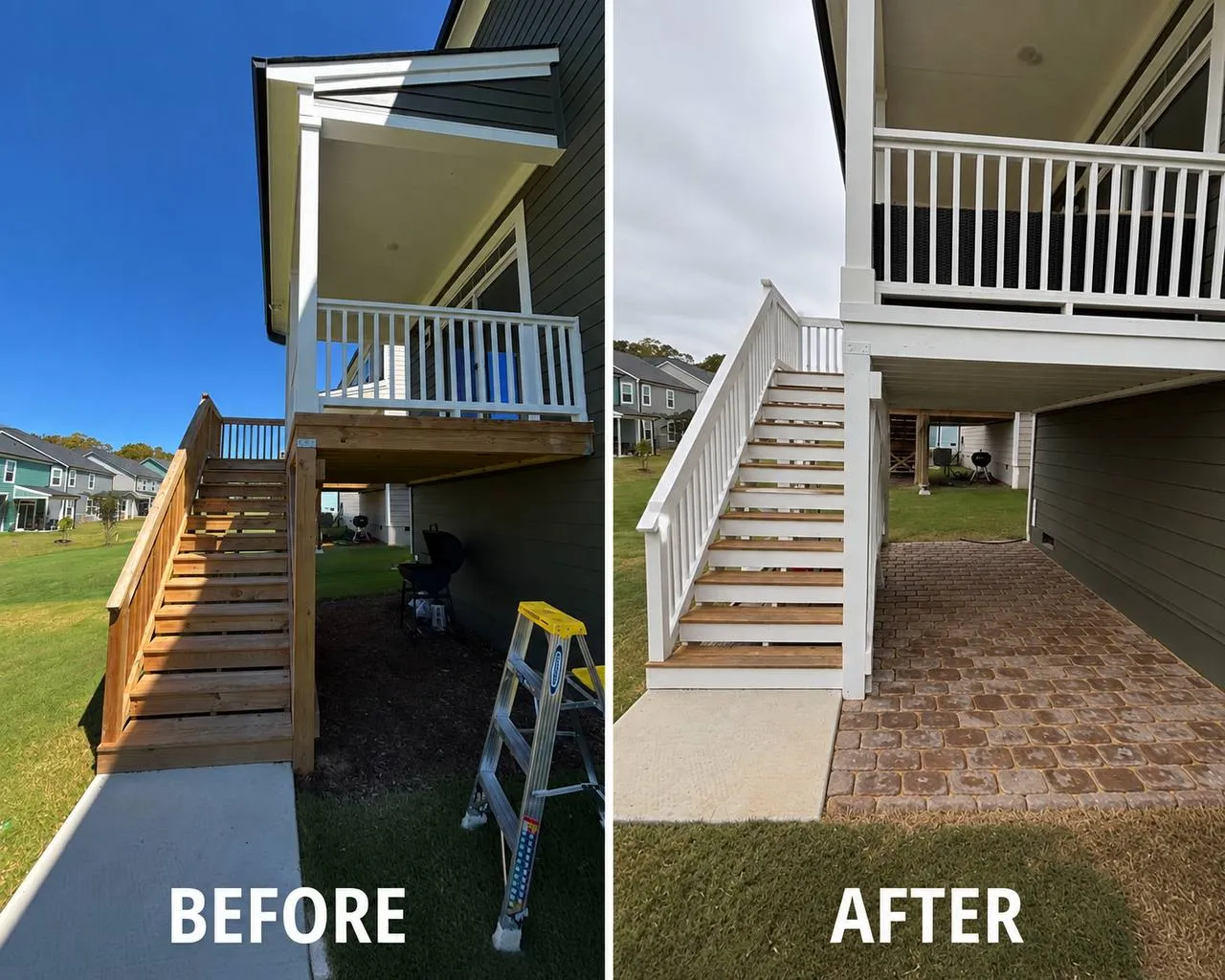
Stair and deck railings brought back to a clean white finish, and the dead strip of dirt under the deck turned into a paver patio.
Decks & Fences in Pittsboro — questions
Our fence runs a few hundred feet. How do you quote that?
By walking it and pushing every post, which is the only honest way. A leaning section usually means one failed post, but the rest of that run went in on the same day and has had the same weather. We give you a count of how many are actually gone and how many are close, so you can decide whether to do the failures now or the whole run once.
Our deck is high off the ground at the back. Does that change anything?
Yes, in two ways. Tall posts need bracing to stop the deck swaying, and that bracing is often either missing or has loosened. And a fall from that height is a different event from a fall from two feet, so the guard rail and its post connections get checked much more carefully. If what is there is not adequate we will say so.
Can you repair the steps into our barn?
Yes, and they are usually worth doing properly rather than patching. Outbuilding steps take a harder life than house steps — equipment, wet boots, no roof — and they are the ones nobody looks at. We measure the rise across the flight and correct anything inconsistent while we are there, because uneven steps carrying a load are how people get hurt.
How to get a price
- 01
Fill in the form
A sentence about the job and the address we would be coming to. Rough measurements help but are not essential — the address is the part we cannot work without.
- 02
Get a number
Most jobs are priced from the form without anyone driving out. Bigger projects get a short visit first, and the estimate is free either way.
- 03
Pick a time
The price is agreed before any work starts. We work 8am to 8pm, seven days a week, and take urgent jobs when we can.
Decks & Fences in nearby towns
Free estimate
Tell us what needs doing.
Fill in the form with a sentence about the job and the address. You get a straight price and a real window back, usually the same day you ask.