Apex, NC
Deck, Porch & Fence Repair in Apex, NC
Decks built during the Apex boom are now twenty to twenty-five years old, which is exactly the age where pressure-treated boards give up and the framing underneath usually has not. That gap is the difference between a repair and a rebuild.
The right age to catch it
The Apex building boom means a large share of the town’s decks were built within the same decade, and they are all arriving at the same point together.
Twenty to twenty-five years is where pressure-treated decking gives up. The boards have been through two decades of humid summers, direct sun and freeze-thaw cycles. They cup, they split along the grain, they soften near the ends and around fasteners, and eventually you find a spot that feels spongy underfoot.
Here is the useful part: the framing underneath is usually fine.
Joists and beams are shielded from direct sun and standing water by the boards above them, and on a deck of that era they were typically treated to a higher retention level than the decking. On most Apex decks we look at, the structure has years left in it and the surface does not.
That gap is worth money to you. Replacing boards and fasteners over sound framing is a fraction of the cost of a rebuild, and the first thing we do on any deck call is establish which one you actually need.
What we check, and why
The boards, obviously — cupping, splitting, softness, and how they feel underfoot.
The joists and beams, from underneath where we can get to it. A screwdriver tells you more than a photograph here: sound treated lumber resists, rotten lumber does not.
The ledger connection, where the deck attaches to the house. This is the connection that matters most and the one that fails most dangerously. Flashing, fastener type and condition all get looked at.
The post connections at the rim joist, which is where nearly all railing wobble originates.
Fasteners are half the story
Decks of this vintage were nailed. Nails work loose as timber cycles between wet and dry, which is why boards lift at their ends, why the deck ticks when you walk on it, and why there are heads standing proud that catch a bare foot every summer.
New boards go down with structural screws. The sound boards that stay get re-fastened at the same time, which is a small extra and usually the difference between a deck that feels repaired and one that feels new.
Composite
A common request here, and a good option. The one thing to settle before ordering: composite decking is rated for specific joist spacing and is less forgiving than wood about spanning further than that.
We measure your framing before anything is bought. If the spacing does not suit the board you have chosen, the options are a different board, blocking added between joists, or accepting a different product. What we will not do is lay it and let you discover the bounce later.
Fences and gates
Same trip, usually the same visit. Gates sag because the post moved, the hinge screws pulled out of end grain, or the frame racked out of square. Each has a different fix, and re-hanging a gate without addressing the cause buys a few months at most.
Getting a price
Three photos does it: one wide shot of the whole deck, one close on the worst area, and one of the underside if you can get to it. That last one is what tells us whether this is boards or structure. We are based in Apex, so if it needs looking at properly, that is easy to arrange.
Boards fail long before framing does
Deck boards sit flat, hold water and take direct sun, so they cup, split and soften first. Joists and beams underneath are shielded and treated to a higher retention, and on a well-built deck of this era they are frequently still sound after two decades. Checking that before quoting is the single most valuable thing we do on a deck call.
The original nails are usually the problem
Decks from the 1990s and 2000s were nailed rather than screwed. Nails back out as the wood cycles wet and dry, which is why boards lift at the ends and why the deck ticks underfoot. Replacement boards go down with structural screws, and the sound boards we keep get re-fastened at the same time.
Composite is a framing question, not a taste question
Swapping wood boards for composite is popular here and entirely doable, but composite is less forgiving about joist spacing than wood is. The framing gets measured before anything is ordered, because a board specified for sixteen-inch centres over framing at a wider span will sag between joists and there is no fixing it afterwards.
Decks & Fences we have done
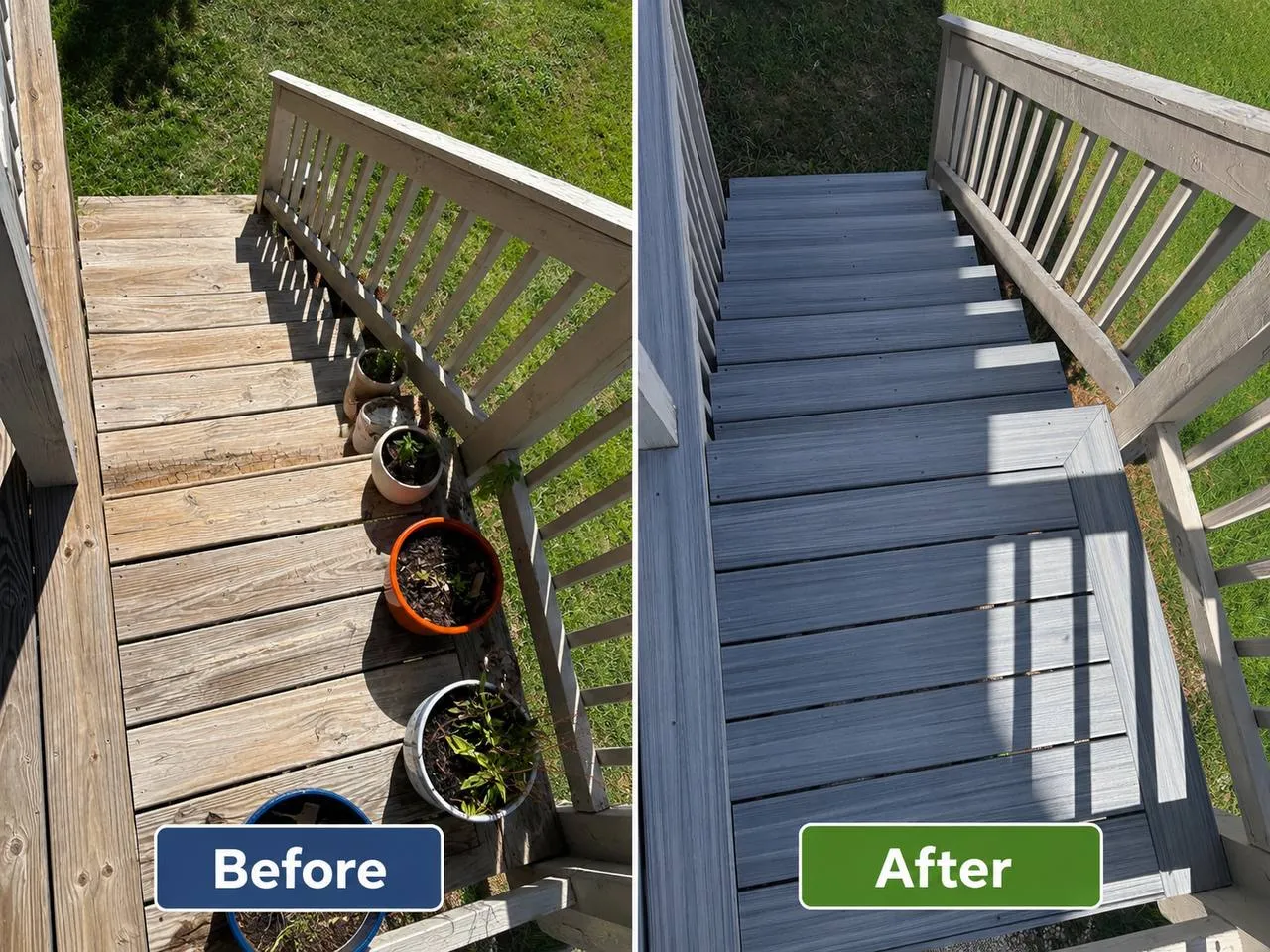
Weathered pressure-treated boards swapped for composite over framing that was still sound. The structure stayed, the surface did not.
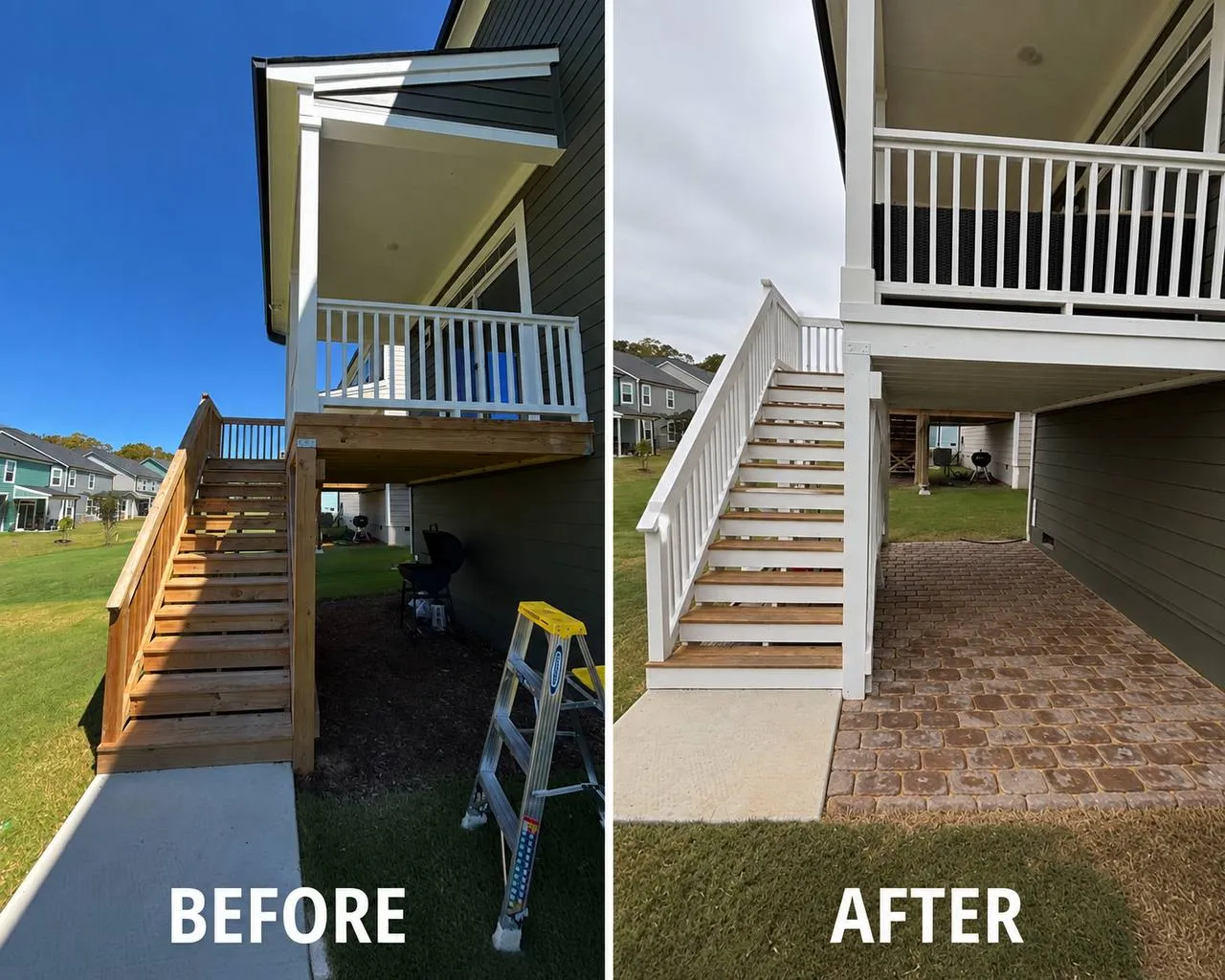
Stair and deck railings brought back to a clean white finish, and the dead strip of dirt under the deck turned into a paver patio.
Decks & Fences in Apex — questions
Can you replace just the bad boards?
Usually, and it is normally the right answer on an Apex deck of this age. We swap the failed boards and fasteners and leave the sound structure alone. If the framing underneath is genuinely compromised we will show you the problem before quoting anything larger — you should see what we are seeing rather than take our word for it.
My railing wobbles. Repair or rebuild?
Almost always a repair. The wobble usually comes from the post connection at the rim joist rather than from the railing itself, and that connection can be reworked properly. It is worth doing promptly — a loose guardrail is a safety item, not a cosmetic one.
Can we switch to composite?
Yes, where the framing is sound and the joist spacing suits the board. We measure the spacing before anything is ordered. If your framing is at a spacing the composite you like is not rated for, we will tell you, because a board that sags between joists cannot be fixed after the fact.
How to get a price
- 01
Fill in the form
A sentence about the job and the address we would be coming to. Rough measurements help but are not essential — the address is the part we cannot work without.
- 02
Get a number
Most jobs are priced from the form without anyone driving out. Bigger projects get a short visit first, and the estimate is free either way.
- 03
Pick a time
The price is agreed before any work starts. We work 8am to 8pm, seven days a week, and take urgent jobs when we can.
Decks & Fences in nearby towns
Free estimate
Tell us what needs doing.
Fill in the form with a sentence about the job and the address. You get a straight price and a real window back, usually the same day you ask.