Clayton, NC
Deck, Porch & Fence Repair in Clayton, NC
Johnston County lots are more open than the wooded ones further west, so decks here dry out properly and fail from the top down instead. Splitting, cupping and screws standing proud are the local pattern.
Sun does the damage here
Clayton has grown as fast as anywhere in the state and the lots east and south of town are generally larger and more open than the wooded ones further west. That changes how a deck ages.
A shaded deck stays wet and rots. An exposed Clayton deck dries out thoroughly between rain, which largely spares it from rot — and instead subjects it to a hard cycle of heating, drying, cooling and wetting, every day, for years.
The failures that produces:
Splitting. Timber shrinks as it dries and the surface dries faster than the core. Checks open along the grain, and once open they collect water and dirt.
Cupping. The upper face of a board dries and shrinks more than the shaded underside, so the board curls. A cupped board holds standing water in its hollow, which is how a sun-damaged deck eventually starts rotting after all.
Fastener movement. This is the one people actually call about. Daily expansion and contraction works nails and older screws upward a fraction at a time until the heads stand proud of the surface. It is a hazard for bare feet long before it is a structural issue.
Surface breakdown. Ultraviolet degrades the surface fibres, which is why an unmaintained deck goes grey and fuzzy. That is cosmetic on its own, but the roughened surface holds moisture and dirt better than a sound one.
Dealing with fasteners properly
Knocking protruding screws back down is the obvious move and it does not last. The hole they came out of has been enlarged by the movement, so the fastener has nothing fresh to grip and it lifts again within a season.
What works:
- Remove the fastener entirely rather than driving it back
- Replace with a longer screw that reaches into fresh timber below the worn hole, or move an inch or two and fix in a new position
- Where an entire deck is doing it, re-fasten the whole surface in one pass
That last one sounds like more work and it is usually the cheaper answer, because doing it board by board over three visits costs more than doing it once.
Cupped boards are often free to fix
Worth knowing before anyone quotes you for replacement.
On a sunny deck, a cupped board is usually cupped because the top dried and the bottom did not. The underside is frequently in better condition than the face. Where that is true, the board can be lifted, turned over and refixed — you get a flat, sound board back for the cost of the labour and a few screws.
Where cupping has come with splitting, or where the underside is no better, the board is replaced. But it is worth checking rather than assuming.
The composite question
It comes up more here than in the shaded towns, because composite genuinely solves the problems an exposed deck has: it does not split, it does not cup, and it does not need sealing.
Two honest caveats before you commit:
Heat. Composite in full sun gets considerably hotter underfoot than timber, and darker colours get hotter than lighter ones. On an open south or west-facing deck in a Johnston County summer, that is worth thinking about before choosing a colour on appearance alone.
Span. Composite is generally less stiff than timber of the same dimension and needs joists at closer centres. If your frame was built for timber at wider spacing, going composite may mean adding joists first. We check that before quoting rather than after.
Where the framing is sound, re-decking over the existing structure — in timber or composite — is good value, because the expensive part of a deck is the frame and you are keeping it.
What we check before quoting
Regardless of what you called about, the same survey:
- Post bases, where the post meets footing or ground
- The ledger, where the deck attaches to the house, and whether it is flashed
- Joist tops, where debris and moisture collect under the decking
- Board ends, because end grain fails first
- Every railing post by hand, because a loose railing is a safety issue rather than a cosmetic one
Where the framing is widely gone or the ledger connection is compromised, that is structural work for a licensed contractor and we will say so rather than patch a deck that should not be carrying people.
Fences
Larger lots mean more fence, and on open ground the failure is usually at grade — the post rots where it meets the soil while the panel above it still looks fine. A section that has started to lean is nearly always a post problem rather than a panel problem.
Distance
Clayton is about forty minutes from us. There is no travel surcharge, and deck work is a multi-day booking in most cases, so the drive is spread across the job. It is also the ideal visit to attach the rest of your list to.
Getting a price
Send a wide shot of the whole deck, a close-up of the worst area, and a photo of the underside if you can safely reach it. Tell us how old the deck is and whether it has ever been sealed. If you are thinking about composite, say so and we will tell you whether the frame will take it.
Sun and heat cycling, not rot
An exposed Clayton deck goes through a large temperature swing every summer day. The timber expands and contracts, the surface fibres break down under ultraviolet, and boards cup as the top face dries faster than the underside.
Fasteners back out of a deck that moves
Repeated expansion and contraction works nails and older screws upward until the heads stand proud. That is a trip hazard and a foot hazard before it is a structural one, and it is the most common thing people actually call about here.
A hot deck is a real consideration in board choice
Dark composite in full sun gets considerably hotter underfoot than timber does. On an open south or west-facing Clayton deck that decides colour as much as taste does.
Decks & Fences we have done
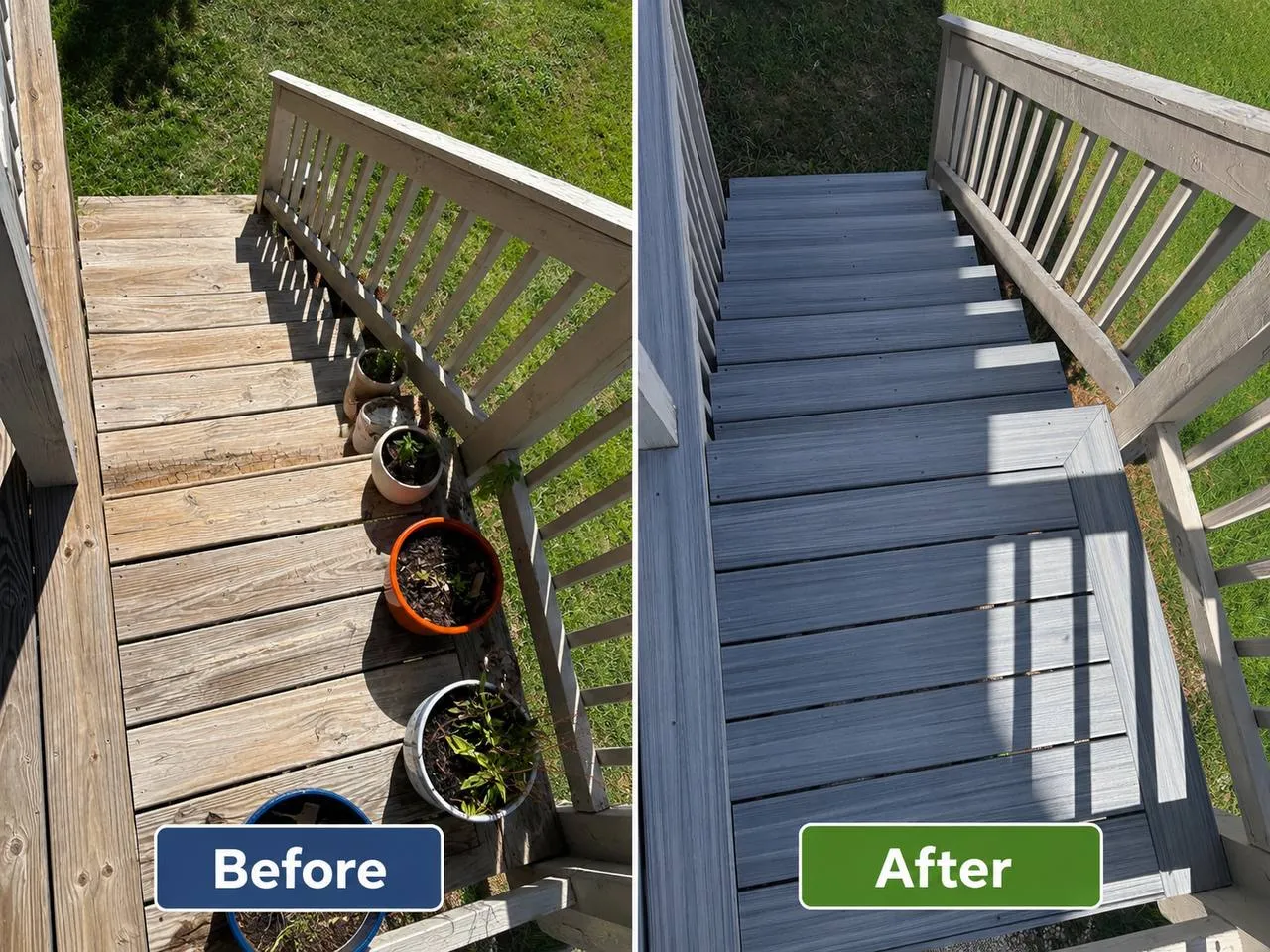
Weathered pressure-treated boards swapped for composite over framing that was still sound. The structure stayed, the surface did not.
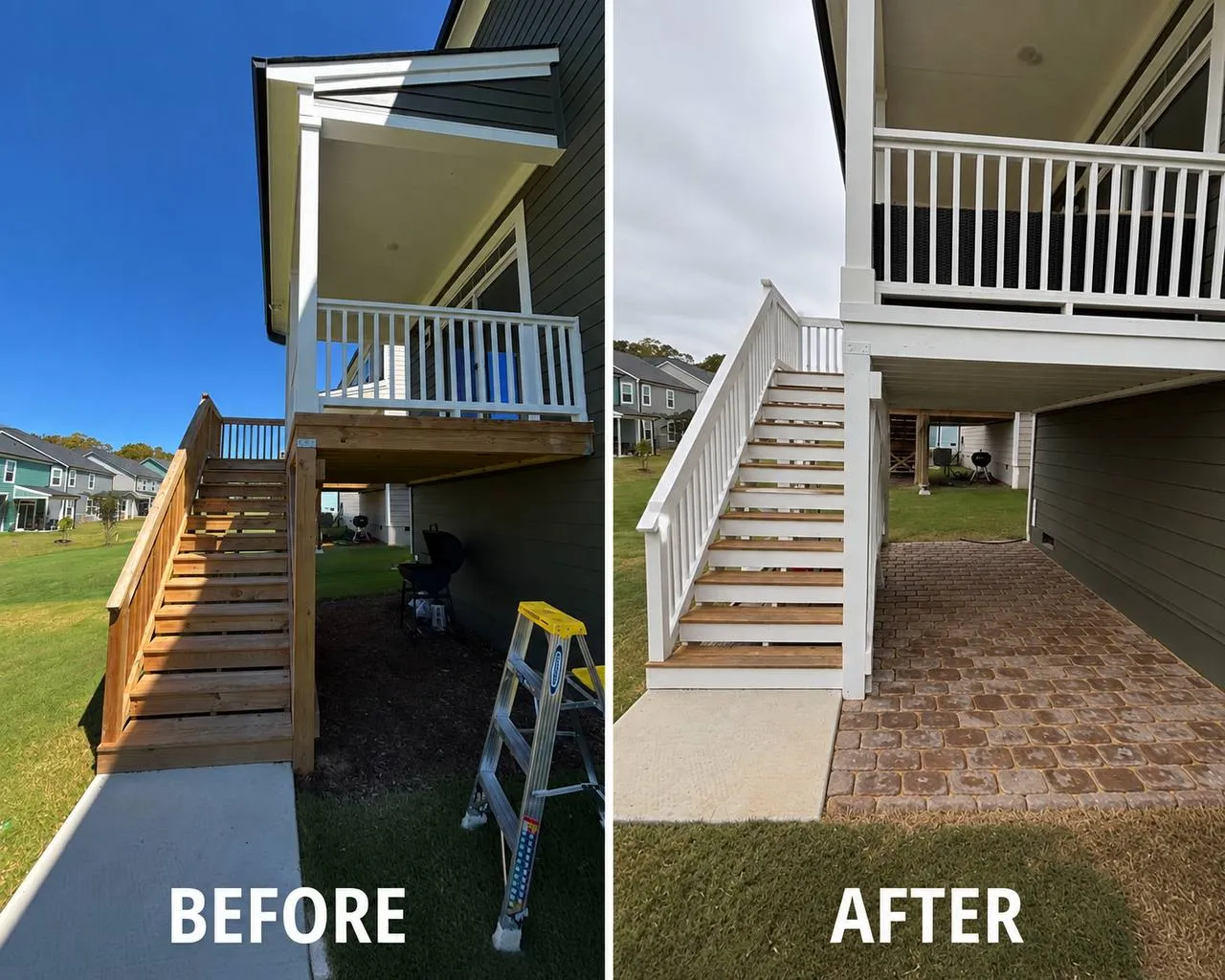
Stair and deck railings brought back to a clean white finish, and the dead strip of dirt under the deck turned into a paver patio.
Decks & Fences in Clayton — questions
Screws keep coming up out of our deck. Can they just be knocked back down?
Only as a temporary measure, because the hole they came out of is now oversized and they will lift again. The proper fix is to remove them and replace with a longer fastener into fresh timber, or move slightly and fix in a new position. Where a whole deck is doing it, re-fastening the entire surface in one go is quick and it stops the problem for good.
Our boards are cupping so water sits in them. Is that fixable?
Often yes, and sometimes for free. A cupped board can frequently be turned over and refixed if the underside is sound, which it usually is on a sunny deck. Where the cupping has gone with splitting, the board is replaced. Either way it is worth doing before the standing water starts causing the rot you had avoided until now.
Should we go composite?
It is a reasonable choice on a deck like this and worth thinking about honestly. Composite does not split or cup and it does not need sealing. It does get hot in full sun, particularly in darker colours, and it does not span as far as timber, so if your joists are widely spaced the frame may need work first. We will tell you whether your structure will take it.
How to get a price
- 01
Fill in the form
A sentence about the job and the address we would be coming to. Rough measurements help but are not essential — the address is the part we cannot work without.
- 02
Get a number
Most jobs are priced from the form without anyone driving out. Bigger projects get a short visit first, and the estimate is free either way.
- 03
Pick a time
The price is agreed before any work starts. We work 8am to 8pm, seven days a week, and take urgent jobs when we can.
Decks & Fences in nearby towns
Free estimate
Tell us what needs doing.
Fill in the form with a sentence about the job and the address. You get a straight price and a real window back, usually the same day you ask.