Cary, NC
Deck, Porch & Fence Repair in Cary, NC
Cary decks fail faster than their age suggests, and the reason is overhead. The tree canopy that makes these neighbourhoods pleasant also keeps decks damp for days after rain, and wood that never fully dries goes soft years earlier than wood that does.
The canopy is the variable
Cary’s mature tree cover is one of the reasons people want to live in these neighbourhoods, and it is hard on anything wooden outside.
A deck under hardwoods stays damp for days after rain that an open deck sheds in hours. Through autumn it collects leaf litter that packs into the gaps between boards and holds moisture against the timber all winter. Algae grows, the surface stays wet, and the wood never gets the drying cycle it needs.
The practical result: a fifteen-year-old deck in a wooded Cary neighbourhood can be in worse shape than a twenty-year-old deck in an open subdivision a few miles away. That is not bad building. It is site conditions, and it is worth understanding because it changes what maintenance is worth doing.
Telling algae from rot
Green and slippery is not the same as rotten, and people replace decks that did not need replacing.
Algae means the surface stays damp. It is a warning about conditions, not a verdict on the wood. The test that actually matters takes ten seconds: press a screwdriver into a board near its ends and near the fasteners, which are the two places that fail first. Sound treated lumber resists. Rotten lumber takes the blade with almost no pressure.
If it resists, you have a cleaning and drainage problem. Clearing the gaps between boards so water and debris can fall through rather than sitting on the frame does more for a shaded Cary deck than almost anything else.
What we look at
Boards, joists and beams from underneath, the ledger connection where the deck meets the house, and the post connections at the rim joist where nearly all railing wobble starts.
On a shaded deck the areas that need most attention are the ones that stay wettest: the board ends, anywhere leaf litter collects, and the joint where the deck meets the house.
Screened porches
Cary has a great many, and they fail at the edges rather than in the field. Screen spline dries out and shrinks so the mesh goes slack. Frame corners open up. The sill board takes water running down the inside of the screen and softens before anything else does.
All of those are cheap to deal with early and awkward once the sill has gone.
The HOA question, answered properly
This is where Cary differs from most of our list, and it works the opposite way round from interior work.
Interior feature walls need nobody’s approval. Exterior changes usually do. Most Cary associations have architectural review covering anything visible from outside the property.
A like-for-like repair — same boards, same colour, same railing — is generally fine without submitting, though every association writes its covenants differently and it is your documents that decide, not ours.
A change of appearance is different. Wood to composite, a new railing style, a different colour, replacing a fence with something that does not match the neighbourhood standard: those normally need approval, and getting it after the materials are on your driveway is a bad position to be in.
Check first. We would rather you did than have the work stopped halfway.
Getting a price
A wide shot of the deck, a close-up of the worst boards, and a photo of the underside if you can reach it. Mention how shaded the deck is, because that genuinely changes what we would recommend. Cary is about fifteen minutes from us.
Shade is why your deck aged early
A deck under mature hardwoods stays wet long after an open one has dried, and it collects leaf litter that holds moisture against the boards all autumn. That is why a fifteen-year-old deck in a wooded Cary neighbourhood can be in worse condition than a twenty-year-old one in an open subdivision. It is not poor building, it is the site.
Exterior changes may need HOA approval
Unlike interior work, exterior alterations in most Cary neighbourhoods do fall under architectural review — changing a deck material, altering a railing style, changing colour, or replacing a fence. Approval is normally straightforward for a like-for-like repair and less so for a change of appearance. Check before you commit to a new look, not after.
Screened porches have their own failure points
Cary has a lot of screened porches, and they fail at the edges rather than in the middle: screen spline drying out and shrinking, frame corners opening up, and the sill board taking water that runs down the screen. Those are cheap fixes early and awkward ones late.
Decks & Fences we have done
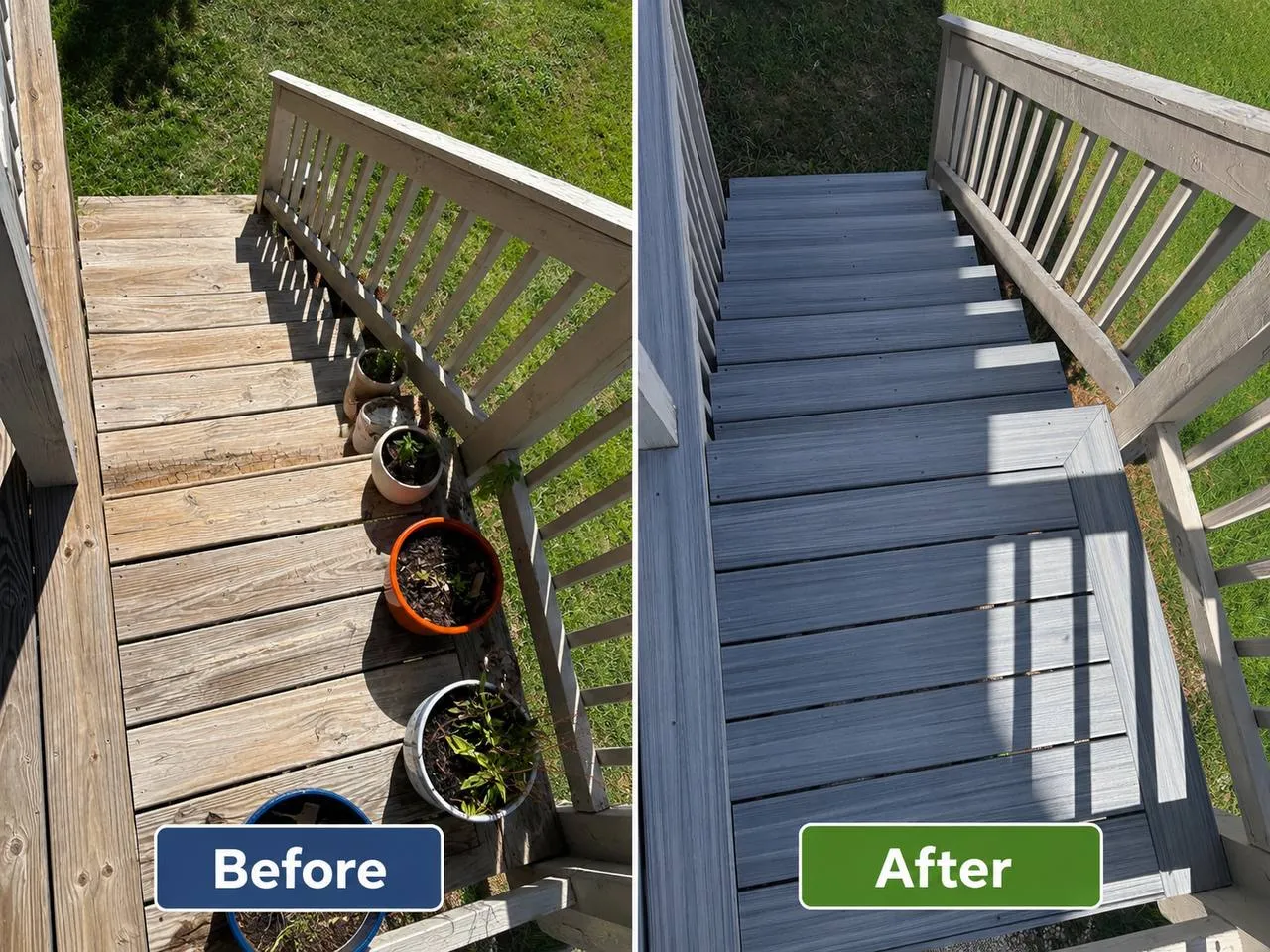
Weathered pressure-treated boards swapped for composite over framing that was still sound. The structure stayed, the surface did not.
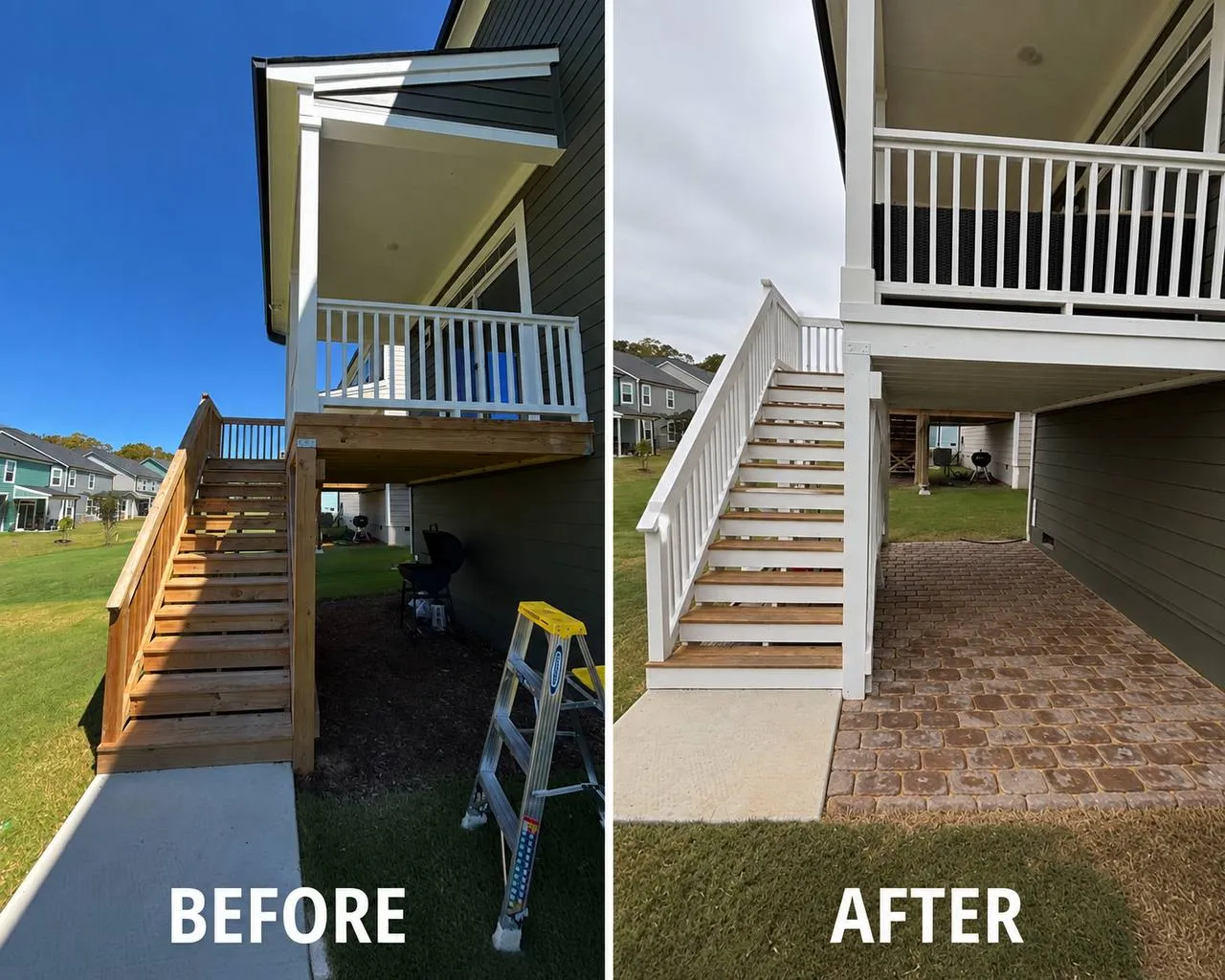
Stair and deck railings brought back to a clean white finish, and the dead strip of dirt under the deck turned into a paver patio.
Decks & Fences in Cary — questions
Do I need HOA approval to repair my deck?
For a like-for-like repair — same material, same colour, same railing style — usually not, but every association writes its covenants differently. For anything that changes appearance, such as going from wood to composite or altering the railing design, you almost certainly do. Check your documents before ordering materials rather than after.
My deck is green and slippery. Does that mean rot?
Not by itself. Algae growth means the surface stays damp, which is normal under a tree canopy and is a warning rather than a verdict. What matters is what is underneath: press a screwdriver into the board near a fastener and near the ends. If it goes in easily, that board is done. If it resists, you have a cleaning problem rather than a rot problem.
Can you seal it after the repair?
New pressure-treated boards need to weather for a few months before they will accept a finish — sealing them too early gives you a coating that will not adhere. We can come back and seal once they are ready rather than doing it on the day and watching it fail.
How to get a price
- 01
Fill in the form
A sentence about the job and the address we would be coming to. Rough measurements help but are not essential — the address is the part we cannot work without.
- 02
Get a number
Most jobs are priced from the form without anyone driving out. Bigger projects get a short visit first, and the estimate is free either way.
- 03
Pick a time
The price is agreed before any work starts. We work 8am to 8pm, seven days a week, and take urgent jobs when we can.
Decks & Fences in nearby towns
Free estimate
Tell us what needs doing.
Fill in the form with a sentence about the job and the address. You get a straight price and a real window back, usually the same day you ask.