Knightdale, NC
Deck, Porch & Fence Repair in Knightdale, NC
Most Knightdale decks are the one the builder put on, which means they are as small as the plan allowed and finished to the cheapest specification that passed. Neither is a fault. Both are why people call.
What a builder deck actually is
Knightdale was a small town until roughly twenty years ago and is now largely new subdivisions, so the decks here are almost all the same thing: a rear deck that came with the house.
It is worth being clear about what that is. A builder deck is sized to the plan and specified to the cheapest option that met requirements at the time. That is not a criticism — it is how production building works, and the deck is structurally fine.
What it is not is a deck designed around how anyone actually uses a garden. Which is why the three most frequent calls here are all additions rather than repairs:
It is too small. The plan allowed a certain footprint and the deck fills it. Once furniture goes on it there is nowhere to walk.
The stairs go nowhere useful. Frequently a short flight down to a landing, or no stairs at all where a garden clearly needs them.
The railing is the base specification. Structurally sound, visually the cheapest option, and often the thing that makes an otherwise decent deck look temporary.
Sealing, and why timing matters
This is the most common mistake we see on decks in this age bracket, and it is one people make out of diligence rather than neglect.
Pressure-treated timber is exactly what the name says: treatment is forced into the wood under pressure, and the boards arrive on site saturated. They are heavy, they are dark, and they are wet all the way through.
Applying a stain or sealer to timber in that state does two bad things: it traps the moisture inside, and it prevents the finish bonding to the surface. The coating sits on top, fails early, and peels rather than wearing.
The test is simple. Sprinkle water on the boards. If it beads up and sits on the surface, the wood is still holding its own moisture and is not ready. If it soaks in within a minute or two, the timber will take a finish.
In this climate that usually means waiting at least a full season, sometimes longer. A deck left bare for a year is in better condition than one sealed at three months.
Once it is ready, the useful work is more than the coating: cleaning the surface properly, clearing debris out of the board gaps where it packs down and holds water, and sweeping the joist tops where the decking is open enough to reach.
Extending, and where the line is
Extending a builder deck is a normal request and a reasonable one. What decides how it is done is structural.
An extension nearly always needs its own footings and its own posts rather than hanging off the existing frame, which was sized for the deck it carries. Whether that is work we take on depends on the scale and on whether it needs a permit.
Where it does — new structural framing, anything requiring inspection or design — that goes to a licensed contractor. We will tell you which side of the line your project falls on at the start, rather than beginning it and stopping halfway.
Repairs, board replacement, re-decking over sound framing, railing work, and stairs within what the existing structure supports are all normal work for us.
Approval before scheduling
These developments generally have architectural review, and anything visible from outside the house tends to fall under it: a deck extension, a change of railing style, a new fence, a colour that differs from what is around it.
That does not change the work at all. It changes the sequence — approval first, then scheduling — and it is worth starting that process before booking anything, because a job held up waiting for a committee is a job nobody is happy about.
What you do inside the house needs no approval from anyone.
What still gets checked
Even on a deck that is only eight or ten years old, the same survey:
The ledger and its flashing. Newer decks are generally flashed correctly, and it is still the failure that hurts people, so it gets looked at.
Every railing post by hand. The connection at the post base is what loosens with use, and it does so long before anything else on a new deck shows wear.
Board ends and joist tops. End grain drinks water fastest, and debris packed into the gaps holds moisture against the joists.
Step rise across the whole flight. Steps that vary in height catch people out, because your feet learn the first one and expect the rest to match.
Fences
New developments often have fences of the same age as the houses, which puts them at the point where posts start to move at ground level. Push each one — a post that has rotted at grade moves with very little effort while looking sound above and below it.
Where a fence is on a boundary, it is worth establishing whose it is before work starts.
Distance
Knightdale is around forty minutes from us. Deck work is a multi-day booking so the drive is spread across it, and there is no travel surcharge. It is also the ideal visit to attach the rest of your list to.
Getting a price
Send a wide shot of the deck, a photo of the stairs from the side, and a close-up of any area you are worried about. If you are thinking about extending, include a photo of the garden showing where you would want it to go.
A builder deck is a minimum, not a design
In Knightdale Station, Widewaters, Emerald Pointe and Princeton Manor the standard rear deck is sized to the plan rather than to how anyone uses it. Extending it, adding a proper set of stairs to the garden, or upgrading the railing are the three most common requests.
Sealing new pressure-treated timber too early is worse than not sealing it
Freshly treated lumber is saturated when it is installed. A coating applied before it has dried out traps that moisture in and stops the finish bonding. It needs a season, and a simple water test tells you when it is ready.
Anything visible from the street may need HOA approval first
A rear deck extension, a new fence or a change of railing style in these developments frequently needs architectural review. It does not change the work, it changes the order — approval first, then scheduling.
Decks & Fences we have done
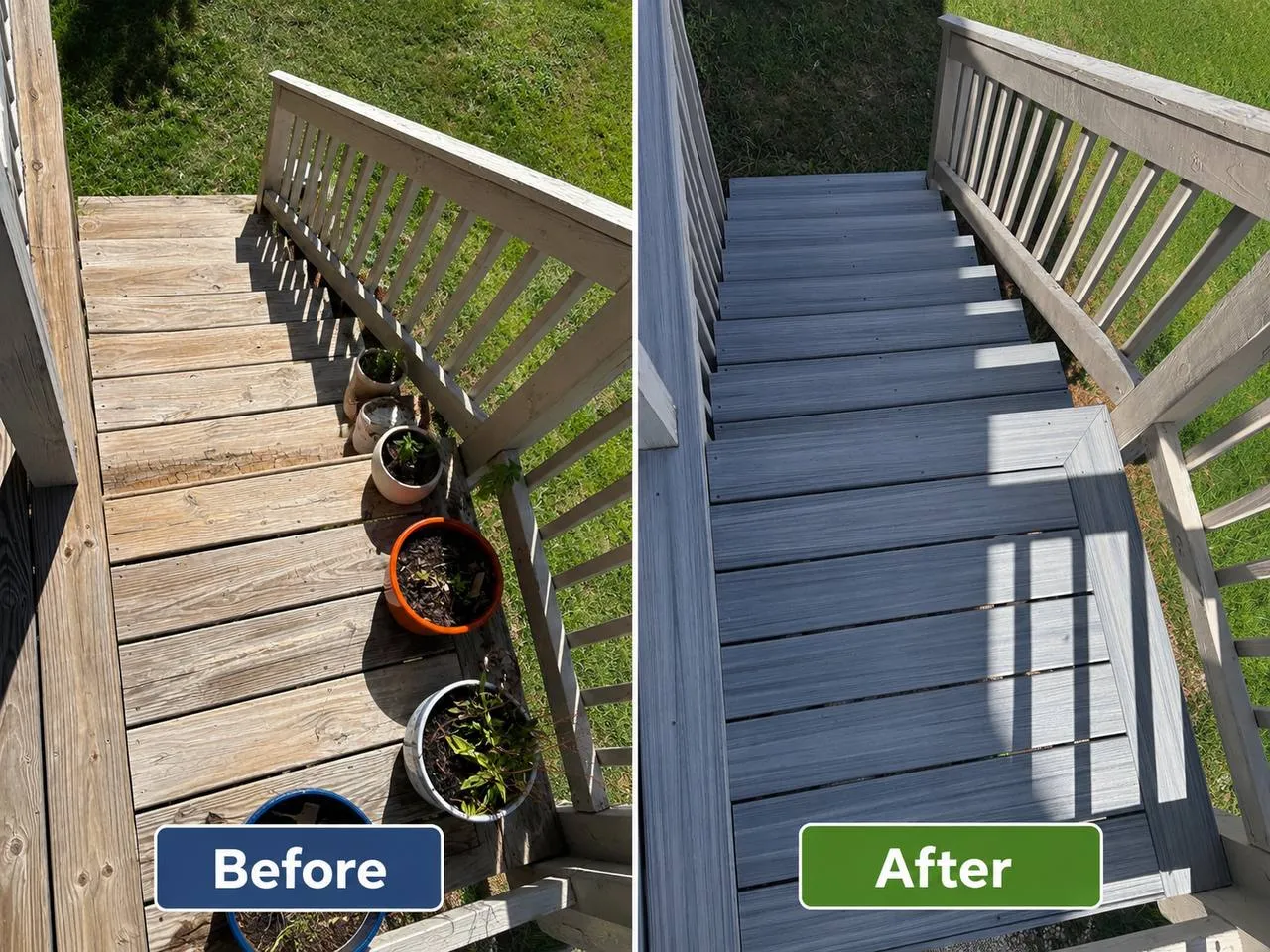
Weathered pressure-treated boards swapped for composite over framing that was still sound. The structure stayed, the surface did not.
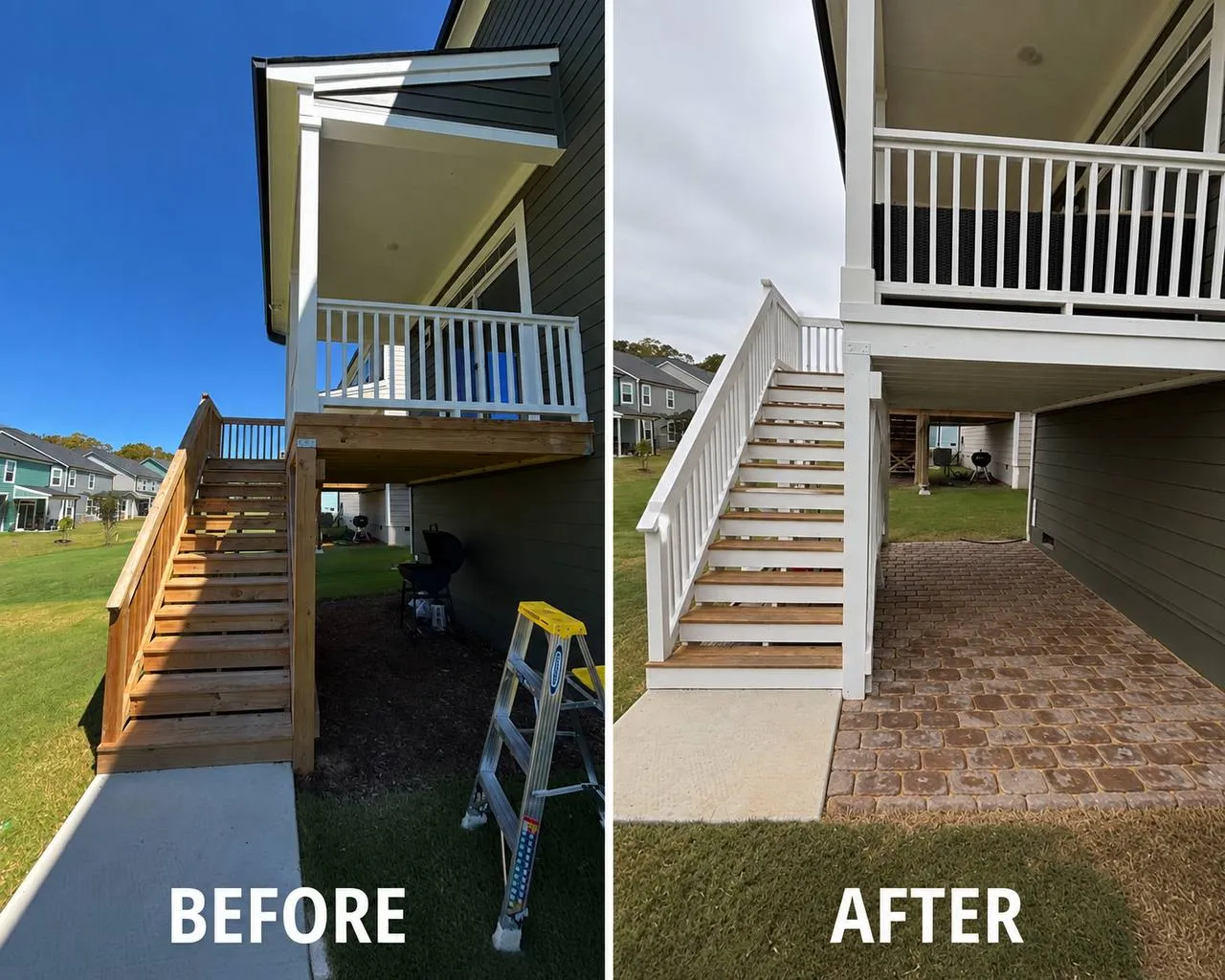
Stair and deck railings brought back to a clean white finish, and the dead strip of dirt under the deck turned into a paver patio.
Decks & Fences in Knightdale — questions
When should we first seal our new deck?
Not straight away. Pressure-treated timber arrives saturated and needs to dry before it will accept a finish, which usually means at least one full season and often longer in a humid climate. The test is simple: sprinkle water on the boards. If it beads and sits, the wood is still wet and a coating will not bond. If it soaks in within a minute or two, it is ready.
Can you extend the deck the builder put on?
Usually, and it is a common job here. What decides it is what the existing structure will carry and whether the extension needs its own footings, which it normally does. Anything that requires a permit or structural design goes to a licensed contractor, and we will tell you which side of that line your extension falls on before we start.
The railing feels flimsy. Is that a safety problem?
Worth checking properly rather than guessing. Builder railings are usually adequate as installed and the connection at the post is what loosens over time. We check every post by hand. Where a post has worked loose, it gets reinforced or refixed — a railing that gives when you lean on it is the difference between a stumble and a fall.
How to get a price
- 01
Fill in the form
A sentence about the job and the address we would be coming to. Rough measurements help but are not essential — the address is the part we cannot work without.
- 02
Get a number
Most jobs are priced from the form without anyone driving out. Bigger projects get a short visit first, and the estimate is free either way.
- 03
Pick a time
The price is agreed before any work starts. We work 8am to 8pm, seven days a week, and take urgent jobs when we can.
Decks & Fences in nearby towns
Free estimate
Tell us what needs doing.
Fill in the form with a sentence about the job and the address. You get a straight price and a real window back, usually the same day you ask.